
El Chalten Hikes: Compare Your Options in 2026
This page contains affiliate links to Trip.com: we earn a commission if you buy through one, at no extra cost to you.
Choose El Chalten hikes by purpose and usable time. Compare APN's one-way route references, shorter viewpoints, lake days, access and complete returns.
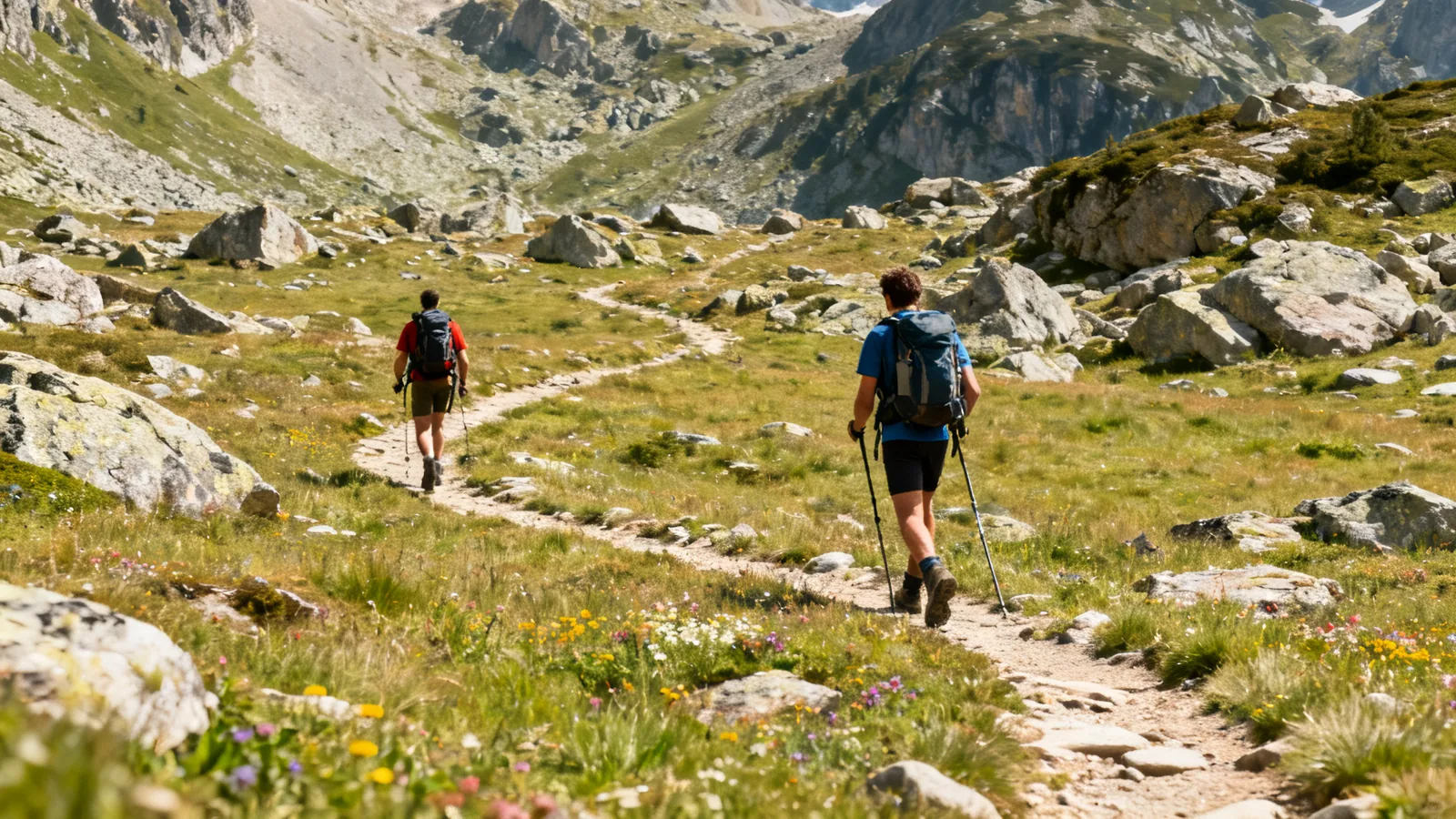
Illustrative scene: hikers from a distance choosing a footpath across a rocky alpine meadow.
El Chalten day trip with short walks
- Best for
- Visitors staying in El Calafate who want a day visit with Los Condores and Chorrillo del Salto walks.
- Trade-off
- This returns to El Calafate; it is not a Laguna de los Tres hike or an overnight transfer. Check walking conditions and pickup.
Choose El Chalten hikes from the time you can walk, the route's effort and its return. A short viewpoint, a lake day and a longer mountain outing are different commitments. Use the park's route references to compare them, keeping any town approach separate.
Choose Los Condores or Las Aguilas for a smaller viewpoint outing, Laguna Capri for a lake-focused walk, or Laguna de los Tres for a larger day with a steep-route warning. Laguna Torre and Loma del Pliegue Tumbado answer other walking purposes. APN lists one-way distances and duration references. Add the return, check current access and choose the route before booking a guide or transfer.
The short answer
A longer area is not automatically the best use of your day. If you mainly want a mountain view, a nearer viewpoint can answer that purpose when visibility allows. If you want a lake walk, choose the lake deliberately. Avoid using it only as a step toward a longer route.
APN's northern trail brochure is the source for the route table below. We checked its map and printed fields directly in October 2026. These are the park's references, not GPS measurements from a visit we made.
Options checked against park route pages
Los Condores for a town-and-mountain panorama
Best for: a smaller viewpoint purpose when the real approach and return fit. Evidence: APN lists a one-kilometre one-way route reference and a town-and-mountain view. Trade-off: a short distance still needs a condition and access check.
Laguna Capri for the shorter Fitz Roy-area lake day
Best for: a lake area without choosing the full Laguna de los Tres ascent. Evidence: APN lists four kilometres one way on its trail reference. Trade-off: the mountain view is weather-dependent, and the return is extra walking.
Laguna de los Tres for the larger mountain route
Best for: a full day chosen specifically for that lake and mountain setting. Evidence: APN lists ten kilometres one way and a steep-trail warning. Trade-off: the ascent and complete return must fit conditions and your pace.
These are purpose-based route choices, not a ranking of tours we tested. A guide can sell different starts or route combinations. So check its real product against the outing you want.
Choose El Chalten hikes by time and effort
The table preserves the brochure's one-way distances. The vertical field is its listed height difference; it is not a detailed cumulative elevation profile. The park's duration reference is a comparison aid rather than a promised pace.
| Route reference | One-way distance | Listed height difference | One-way time reference | Main purpose |
|---|---|---|---|---|
| Los Condores | One kilometre | 100 metres | 45 minutes | Town and mountain panorama |
| Las Aguilas | Two kilometres | 100 metres | One hour | Lake Viedma and steppe view |
| Fitz Roy viewpoint | Four kilometres | 350 metres | One hour 30 minutes | Named mountain viewpoint |
| Laguna Capri | Four kilometres | 350 metres | One hour 45 minutes | Lake in the Fitz Roy area |
| Laguna de los Tres | Ten kilometres | 750 metres | Five hours | Larger lake-and-mountain route |
| Torre viewpoint | Three kilometres | 250 metres | One hour 15 minutes | View into the Torre area |
| Laguna Torre | Ten kilometres | 250 metres | Three hours 30 minutes | Lake and glacier setting |
| Loma del Pliegue Tumbado | Ten kilometres | 1000 metres | Four hours | Broader clear-weather panorama |
Scroll for more →
The brochure includes other route references as well. They are not all right substitutes for an ordinary day hike. In chosen, remote routes can have registration and access rules. This guide stays with the visitor choices above. Avoid turning every line on the map into an interchangeable outing.
Read the El Chalten base guide to fit the chosen walk into your stay. Your lodging address and arrival time affect the useful day. A printed trail total alone does not prove when you can begin.
Shorter walks and viewpoints
Los Condores and Las Aguilas serve different views. APN describes Los Condores as a town and mountain panorama. Las Aguilas looks towards Lake Viedma and the steppe in the park reference. Choose the purpose you want rather than assuming that the nearer route reproduces every famous mountain photo.
The park's town map places these walks on the visitor-centre side of the settlement. Use that orientation to check the real start. A room near another trail approach can still need a town walk first.
A shorter outing can fit an arrival or departure day when the real journey leaves enough time. Do not plan it from the calendar label alone. A late bus, luggage task or fixed onward pickup can reduce the available walking time.
The named Fitz Roy viewpoint is another choice in the broader northern trail network. It is separate from Laguna de los Tres. If the mountain-view purpose matters more than reaching a chosen lake, compare those places before committing to the larger ascent.
A waterfall purpose: Chorrillo del Salto
APN's brochure also lists Chorrillo del Salto. Its reference is three kilometres one way and forty minutes in the duration column. The table does not give a vertical-difference value for that row, so we do not invent one.
The park's broader outing page describes the waterfall as a northern outing that can also be reached by road. A walk from town and a vehicle-assisted visit are different plans. Read the real starting point before comparing the brochure figure with another seller's total.
This can answer a different purpose from a mountain lake or high panorama. Choose it because you want the waterfall outing, not because a clouded peak automatically makes every other route a safe fallback. Current advice and the return still apply.
Longer day hikes
Laguna Capri gives a lake-focused outing within the Fitz Roy area. Its brochure reference is shorter than Laguna de los Tres and has a lower listed height difference. It remains a mountain walk with a return, not a brief stop added without planning.
Use the Capri route guide for the starting-point detail and the difference between the lake and nearby lookout. If a seller combines both, check the real linking branches rather than adding separate out-and-back totals.
Laguna de los Tres is the larger commitment. APN warns that its steep route is dangerous in wind and rain. Choose it with the full ascent and return in mind, and follow the present park rule. Avoid treating the headline area as compulsory.
The Laguna de los Tres guide keeps the one-way distance and town approach separate. It also compares the shorter choice. A visitor who turns back on an allowed route because the day no longer fits has made a route decision, not failed a race to a viewpoint.
Laguna Torre has a different lake-and-glacier purpose. The brochure's route table lists its own distance, vertical difference and duration. Do not use the Laguna de los Tres effort as a proxy merely because both are popular full-day outings.
Loma del Pliegue Tumbado has the largest listed vertical difference among the choices in our table. APN links its panorama to clear sky. It should be chosen for that purpose with the current route advice, not used automatically as a bad-weather replacement for another long walk.
Match the route to the purchased day
A guided seller may combine a shorter walk with other stops. Ask how much of the listed day is walking and how much is road travel. A full-day product can cover a smaller trail commitment than an independently planned mountain outing.
If transport changes the start, keep that difference in the comparison. Ask where the guide leaves you at the end. A one-way vehicle drop-off can create a return task that a town out-and-back does not have.
For a group with mixed preferences, ask what the shorter choice gives. It can mean another guided walk, time at the lodging or a separate transfer. Do not assume the walking guide can run two different routes at once without another plan.
Choose the service after the route purpose is clear. That makes the key inclusion questions exact: a guide on the selected trail, a road journey to a named start, or a meal on the date you need. A broad area package title leaves those jobs unresolved.
Trailhead and transport comparison
Start with the place you will reach. APN's brochure separately lists an approach from the visitor centre to the beginning of the Fitz Roy and Torre trails. A mountain-trail reference and a full lodging-to-lodging day can therefore have different totals.
If you book a vehicle-assisted outing, ask which access it uses. A drop-off farther north can create another route structure and return task. The seller should name the real start and finish before you compare its duration with a town out-and-back.
For a self-guided town walk, use the park's current signs and route rule. Do not navigate from a supplier's scenic image. Keep to the allowed public network. Ask the park when the source pages leave a present access question unclear.
A guide and a driver solve different tasks. A private transfer can simplify the road link while leaving the trail day self-guided. A guided hike should say who walks with you and what happens if the planned area is unsuitable.
Ask whether a package supplies park entry. APN's current northern access details says entry is charged. An older account describing all the walks as free cannot prove today's ticket plan. A hotel room also does not include entry by assumption.
Weather alternatives
Choose an alternative that changes the real walking task. Replacing one long exposed area with another demanding route may not solve the reason you wanted a fallback. Read the height difference, start and current advice for the alternative too.
A shorter allowed viewpoint can suit a day with less time or a party that prefers a smaller walk. A rest day can also be the right choice when conditions do not fit the planned outing. Neither should be sold as a promise that a chosen mountain view will appear.
If you reserved a guide, check whether it can move the outing to another date or route under the terms. A free date in your hotel calendar does not prove guide availability. Ask who handles the road link when a guided route changes.
APN warns that weather in town can differ from the mountains. Use that warning when judging a plan. Do not turn a clear breakfast view into a guarantee about the whole upper trail.
Find the detailed trail guides
Read the Capri page for the shorter lake choice and the Laguna de los Tres page for the larger ascent. Both use the official brochure's start points. Keep their published references beside the real day you will walk.
The town guide gives the wider stay structure. Choose the walk first, then fit the lodging, food and any transfer around it. That makes the useful walking time more visible than a list of famous places.
Choose the base for your walks
Compare El Chalten hotels by real address, room access and breakfast timing before reserving the stay.
Factors to consider
Time on the ground: count usable walking hours after arrival tasks and before departure. A full calendar day and a full trail day are not always the same thing.
Return commitment: add the way back and any town approach. A one-way trail reference should not be treated as the total because the table gives one number.
Walking purpose: a town panorama, lake and higher mountain area answer different reasons to go. Choose the one you want rather than letting a longer distance decide the trip.
Current access: maps and brochures show route relationships. The park's present rule governs the allowed outing. Follow a revised limit even when an older leaflet lists the trail.
Purchased services: guidance, transfer, meals and entry need separate inclusion answers. A package can handle several, but its title alone does not prove which tasks it takes over.
Build one realistic day
Write the selected area and real start. Add the return before choosing an evening commitment. Put the current park advice beside the route reference, then decide whether the day still fits your party.
If another person wants a different walk, settle how the plans work before leaving town. A shared room or transport booking does not prove that the whole group must take the same route. A guided group may have less freedom to split than an independently planned stay.
Keep the route and contact details available without depending on a signal. APN's brochure warns of poor or absent phone reception in the area. Do not make a last-minute message the only way to settle where a party or vehicle will meet.
Read a brochure table correctly
Check the heading above a distance or duration column. The northern table marks duration as one way. Add the return, but remember that pace and conditions can differ between the outward and inward walk.
Keep listed height difference separate from a detailed elevation profile. A route can include smaller ups and downs beyond one broad vertical field. Do not use the field to promise exactly how much climbing every variant contains.
Read the route warning beside the figures. A short number does not cancel a steep or weather-related caution. The warning and present park rule are part of the route choice, rather than optional text to skip after choosing from the distance column.
Match the finish to your town plan
Compare what happens after the viewpoint as well as the climb. Some walks return along the same approach, while a different trailhead may need transport. Write the real finish beside the return booking before choosing the route. A walking time that ends at a viewpoint is not the time you will be back in town.
If your party wants different distances, settle how a shorter option works before leaving. A person turning back should have the route and essentials rather than depend on borrowing them from the continuing group. Arrange a clear meeting place that does not require a trail-side message. Choose the shorter shared route when a split would make either return uncertain.
Questions before choosing a hike
Which El Chalten hike fits a shorter visit?
Choose from your real start, available time and purpose. APN lists smaller viewpoint references for Los Condores and Las Aguilas, while Capri is a separate lake outing. Add the return and town approach to any choice. A shorter route still needs current access and condition checks before you walk.
Is Laguna de los Tres the only Fitz Roy option?
No. APN maps a named Fitz Roy viewpoint and Laguna Capri separately from the longer lake route. Choose the area that fits your day. A clear mountain view remains weather-dependent from any location. So the longer walk cannot guarantee the image you have seen in a brochure.
Are the listed distances round-trip totals?
Our table preserves the park brochure's one-way references. Add the matching return and your real town approach. If a product uses another drop-off or links several branches, read that route separately. Do not assume every tour with the same mountain name covers the same start, finish or total distance.
Do I need a guide for every walk?
Use the park's current rules for the exact route and date. Where self-guided walking is allowed, a guide is still a separate service you may choose. Ask what the product includes and which outing it follows. A guide's presence does not override a closed trail or guarantee clear mountain visibility.
Sources and facts last checked
Checked October 2026: APN's northern brochure, visually inspected route table, and current Los Glaciares visitor pages. The values above keep the source's one-way convention; date-specific service is not inferred from the leaflet.
Verdict on El Chalten hikes
Choose El Chalten hikes by their real purpose and complete return. Use the park references to compare routes, then follow current advice for the day. Fit the services and town stay around the chosen walk. Avoid treating every famous trail as a required stop.