
Patagonia W Trek Tours: Compare Your Options in 2026
This page contains affiliate links to Trip.com: we earn a commission if you buy through one, at no extra cost to you.
Compare Patagonia W trek tours by real guide coverage and route. Check sourced examples, trail sleeping, meals, transport and current change terms.
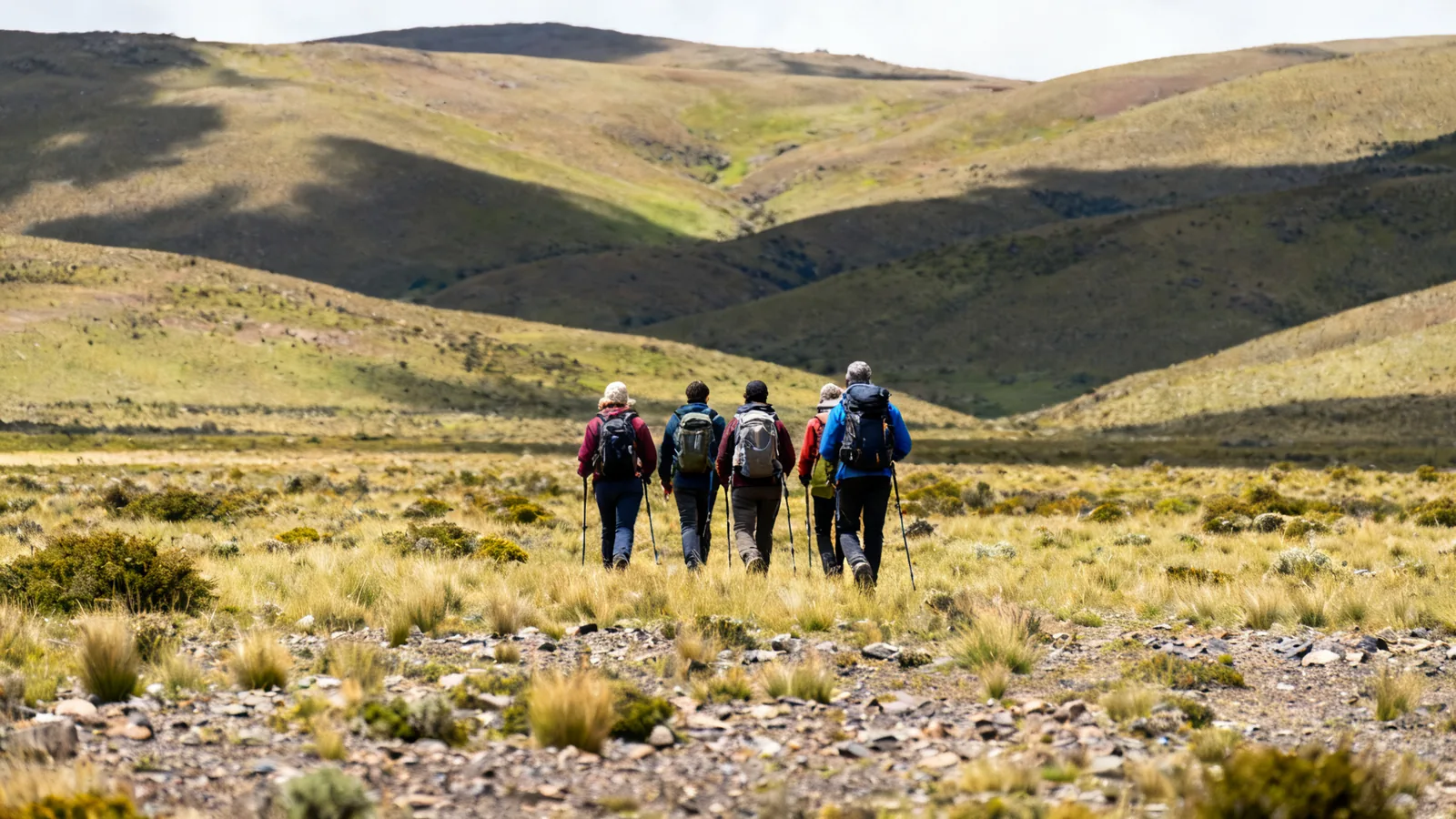
Illustrative scene: a small guided trekking group from behind in open Patagonian foothills.
Base Torres day hike as an alternative to a full W
- Best for
- Walkers considering a single guided Base Torres outing instead of committing to linked W stages.
- Trade-off
- This is not a W Trek package. It does not reserve the W route nights, meals or multi-day support.
Patagonia W trek tours differ mainly in who guides the walking, who secures the nights and what the package includes. Choose the support level first, then compare the real daily route and sleeping products. A booked W package is not automatically a guided trek. A guided day outing is not the complete linked route.
The useful comparison includes every overnight, meals and arrival and exit transport. Ask the seller to name the provider and the services confirmed for your dates. Compare the hardest day and the carried load before deciding from a starting price or a scenic photo.
Package choice: buy full guiding when you want support on the trail, self-guided planning when you want bookings booked, or direct services when you can manage the links yourself. Confirm the route coverage and overnight products before fixing outer travel.
Compare W support levels
The same broad route can be sold with different tasks. A guide joins the walk. A booking service can arrange rooms, tents and transport while you walk independently. Direct booking means linking those services yourself.
| Support level | Best for | Main trade-off | Evidence to request |
|---|---|---|---|
| Fully guided trek | On-trail support and shared daily decisions | Group pace and stated guide coverage govern the day | Exact guided stages and changed-route process |
| Self-guided package | Beds and logistics booked without a walking group | You manage the walking within current rules | Confirmed nightly records and useful briefing |
| Direct self-guided bookings | Control over individual service choices | More task for calendar and transport links | Complete bed, food and travel sequence |
| Lodge with selected W walks | A stable room with guided daily outings | It may cover branches without the continuous links | Actual routes and return-to-base plans |
Scroll for more →
Choose the job you want the seller to do. A pre-trip briefing is valuable but does not place that trip contact beside you at the valley junction. A driver solves the road approach but does not guide the ascent. Compare each role separately.
Options checked against provider and park pages
The examples below describe published services checked October 2026. They are documentary comparisons, not independently tested rankings or live inventory. Obtain the dated quote and route booking record from the seller before booking.
Guided example: Intrepid Classic W
Best for: a traveller seeking a guided group route with organised trail nights. Evidence: Intrepid's Patagonia Torres del Paine Classic W Trek publishes a six-day guided programme. Trade-off: its lodging notes allow supplied-tent lodging when refugios cannot be secured.
Confirm the real night sequence and sleeping products in the current quote. Ask where the package begins, which meals and transfers it gives, and whether any optional outings sit outside the core programme. We do not repeat displayed availability or ratings as checked booking facts.
Package example: Vertice Classic W choices
Best for: a traveller comparing a five-day route with self-guided or guided support. Evidence: Vertice's 5D Classic W Trek separates guided and self-guided pricing and describes the route. Trade-off: the self-guided package does not put a walking guide or porter on the trail by default.
Ask which support version the proposal covers and whether the quoted sleeping products are secured. Its inclusion list covers park transport, meals by route plan, the boat and entry. Check each item in the dated proposal. Flights and own costs should be checked separately.
Direct booking alternative
Best for: an experienced self-guided traveller willing to link the whole route. Evidence: the official CONAF map defines route relationships, while the lodging managers and transport providers confirm their services. Trade-off: you handle the handoffs and changed bookings yourself.
This is a travel structure, not a third live offer. It needs all nights and transport to agree on the same allowed route. An available bed on one date is not proof that the full W can be completed around it.
Match the product to the W you want
Start by saying whether the continuous trail matters or whether selected walking goals are enough. The W's western, central and eastern branches can be visited through different programme structures. A transfer-based package may reach the goals while skipping a linking trail section.
Read every day's start and finish. If the route uses a vehicle between sectors, it should say so. A lodge programme can use daily pickups and returns rather than linking trail nights. Those designs may fit your holiday well, but should not be compared as identical route coverage.
Continuous trek versus selected walks
A continuous W joins walking stages between overnight places. That creates the experience of carrying your belongings along a route, with viewpoint branches fitted between the beds. The day must finish at the next confirmed overnight.
Selected walks can return to a room or use transport between walking areas. This may offer more rest and route choice, depending on the base and service. It can also involve more road time. Ask the seller to show the real walking and transfer legs separately.
Check the viewpoint endpoint
A day labelled French Valley may have a shorter or longer goal. A Grey day may include the main branch without an optional extension. A tower day needs the full Base Torres ascent and return. Confirm the named endpoints rather than assuming the furthest view appears in every package.
If a must-see goal is conditional, ask what happens when it cannot run. The provider should explain the useful alternative and terms. A weather qualification is normal route details, but it should not leave the rest of the day unexplained.
Compare duration and usable days
Count arrival, full walking and exit days separately. A programme can include a gateway meeting or final town return within its headline duration. Another can need those nights outside the package. Compare the whole holiday calendar.
Vertice publishes different five-day route orders. Its four-day Express programme uses a road and boat link after the first eastern day. Checked October 2026, that is a meaningful coverage distinction. A shorter package is not the same continuous route with one bed removed.
The first-day constraint
Ask when you must reach Puerto Natales or the package's meeting point. A required briefing can make a prior night needed even if the trek itself starts next morning. Book incoming travel to that reporting time, not only to the date called day one.
If the first day includes the towers after road arrival, check the real start time and current trail rule. Bags, entry and a shuttle can precede walking. The package should explain how a late arrival affects that goal.
The final-day constraint
Ask where the service ends and at what stage you are free to continue elsewhere. A late road return to Puerto Natales is different from a morning checkout. The flight gateway and stored-bag collection may need another night.
Do not book a key flight from a rough trek finish estimate. A gateway reserve can protect the outer journey from a changed hike, boat or road link. Include that room in the total trip comparison.
Guides, group size and pace
Ask whether the guide joins all required walks and whether the group is private or shared. A private airport transfer does not prove exclusive guiding. A booking trip contact may only support the briefing and logistics.
Obtain the group-size terms for the exact departure. Do not infer a small group from a photo showing only a few people. Ask how the guide supports the person who needs more time and how the group handles a shortened viewpoint.
A mixed-ability party
Give the seller concrete accounts of recent walks for each person. Include descents, rough surfaces and consecutive days. A broad label such as fit or active may hide a difference that matters on the route.
If one person needs a shorter goal, ask how the party divides and reunites. One guide may not be able to support two distant routes at once. The alternative can need a second guide or driver, with extra cost and a different day plan.
Support during a changed stage
Ask who makes the route decision and who contacts the next lodging or transport provider. A guide may lead the walk while a separate trip contact handles service changes. Both roles should be clear in the package record.
Do not accept a general promise to look after you as the only answer. You need the useful contact and terms for changed nights, missed navigation or an interrupted stage. The value of support becomes clearer when the original schedule cannot be followed.
Refugio and camping choices
Compare sleeping products night by night. A refugio bed can involve a shared room, while a supplied tent gives another kind of comfort. A pitch for your own kit puts more weight and preparation with you. The package should name the real product for each night.
Use the manager's current product details from Vertice or Las Torres as the evidence. A reseller summary should not override the provider's inclusion list or the issued booking record.
| Overnight choice | What to verify | Why it changes the quote |
|---|---|---|
| Dorm bed | Room plan and bedding product | Privacy and gear needs vary |
| Supplied tent | Occupancy, mat and bag for each person | Camping comfort and carried load vary |
| Own-tent pitch | Place booked and allowed setup | You carry the sleeping system |
| Mixed nights | Full kit list across all stops | One different night can change the pack |
Scroll for more →
Read replacement clauses
If a package may replace a refuge with camping, ask when that decision is made and what you get. The quoted experience should not remain ambiguous until arrival. Supplied tents may be acceptable, but the traveller should choose that compromise knowingly.
If a different sector is proposed instead of a different sleeping type, check the adjacent walks. A room elsewhere in the park is not always a usable substitute for a trail night. Request a revised route, not only a new bed record.
Room and tent preferences
State key privacy or bed rules before payment. A request to stay together can be different from a guaranteed plan. The seller should explain what it can secure and what remains a preference under the lodging provider's terms.
For a couple or family sharing a tent, check the product's occupancy and each person's sleeping items. A tent line on the invoice is not proof of multiple mats or bags. Make the quantities visible.
Meals and dietary needs
Ask for meals shown beside the real days. The first walking lunch and final exit food can matter as much as the dinners. A full-board label should be translated into meals you can use at the right time.
Get the meal provider's own answer to any dietary need. Different managers can have different menu and service plans. If the seller cannot prove an adequate meal at a stop, discuss the required carry-in food before booking.
Packed lunch timing
Know where the walking food is collected and whether that happens before checkout or at the previous evening. The route may begin before an ordinary lunch period. A meal entitlement that cannot be used during the stage does not solve the food task.
If one night changes, update the meal plan. The new property may issue food differently or have another confirmed product. Do not assume the old lunch plan transfers automatically with the bed.
Shops and self-catering
A minimarket can add flexibility, but its existence does not guarantee a chosen item. Do not make key food depend on uncertain stock at a remote stop. Ask the provider what should be bought in town.
If cooking yourself, follow the designated areas and current park rules. A self-guided package should explain the equipment and food left to you. A pitch-only option needs more preparation than a stay with confirmed meals.
Transport and entry inclusions
Separate the road pickup, park shuttle and lake crossing. A package may include some or all of them. The written list should name the starting and finishing points, rather than describing transport only as included.
The Puerto Natales to Torres del Paine guide helps match the park road stop to the first stage. It distinguishes eastern arrival from the Pudeto boat approach. Use those endpoint questions when reading the package proposal.
Road pickup
Give the seller the real town address or airport arrival. Ask whether the package collects there or needs you to reach another meeting point. A programme beginning in Puerto Natales may leave air travel and airport transfer outside its boundary.
For a private pickup, confirm the vehicle, luggage space and waiting terms. For a scheduled service, confirm reporting and boarding. A missed separate flight or bus may not be covered by the trek package.
Pehoe navigation
The catamaran provider is the first-party source for the current Pudeto–Paine Grande crossing. Ask whether the package ticket covers the required direction and date. A return sailing and an entry sailing are different route tasks.
Know who handles a navigation change. A delayed or unavailable boat can affect the first bed or final town return. The package should explain its planning role and your obligations under the terms.
Park entry
Use the official ticket listing to check current categories and notices. A bed booking does not buy entry. If the package includes it, ask how the pass is issued and which visitor details it needs.
Save the ticket offline with the nightly records. The park and lodging documents should describe the same people and route dates. Correct a mismatch through the seller while you can reach it before departure.
Carried gear and porter support
Ask what you carry on each day, including sleeping items, food and own belongings. A supplied-camping product can reduce gear weight without providing a porter. A guide can accompany the route while each traveller still carries their own pack.
If a porter service is offered, ask about weight, endpoints and cost. Do not assume a town luggage transfer reaches every trail stop. The service needs a defined route and a confirmed place where the bag is received.
Separate issued gear from own gear
Make a list of items supplied at each night and items carried between them. This avoids duplicated equipment and missing bedding. The night with the greatest own need sets much of the pack plan.
Use the provider's current packing advice for the booked route. Test the carrying plan before travel. Familiarity with a long hike using a small bag is different from several trail days with an overnight load.
Hired equipment and the exit
If hiring gear in town, confirm collection before the briefing and return after the final road arrival. A late exit can fall outside the shop's hours. Arrange the timing so it does not compete with the next flight or bus.
Keep the rental record and contact alongside the package documents. The trek provider may not manage equipment hired separately. Know which supplier handles a missing or damaged item and how that affects the journey home.
Access, seasonal rules and weather changes
The package must fit current park rules for its real route. Checked October 2026, the official ticket listing carries a Paine Massif circuit closure through 31 October subject to review. That notice concerns the O circuit and does not prove the status of every W stage.
Use CONAF's visitor advice and the provider's current briefing for the chosen walk. An listed season is a planning window, not an access guarantee. Visibility and navigation can also change without making every other park outing unavailable.
Shortened goal versus interrupted link
A shorter viewpoint within a day may still reach the next bed. An interrupted through link can affect the whole overnight sequence. Ask the seller to distinguish those responses in its change process.
If a substitute outing is proposed, compare its route and support honestly. A scenic drive may be enjoyable, but it is different from the guided hike originally purchased. The contract should explain the available choice and any price effect.
Cancellation terms
Read the deposit and final-payment schedule before committing. Ask which services are refundable or changeable and which are fixed. A flexible flight does not make a trail bed or private guide flexible.
Ask when pending lodging becomes confirmed. The seller should explain the choices if a key night cannot be obtained. A deposit can begin the booking process without establishing every service, depending on the stated terms.
Compare the payable trip total
Use the same party, dates and support level in each quote request. Add excluded flights, gateway nights, gear hire and needed transfers. A lower starting price may reflect guide-free service, a different sleeping product or fewer bundled meals.
Avoid comparing an individual service with a complete package. A refuge booking can be good value for its purpose. But it does not perform the planning work of a full seller. Likewise, a guided package may be more than you need if you can manage the route and prefer self-guided walking.
| Cost boundary | Ask whether it is inside the quote |
|---|---|
| Trek services | All required nights, meals and issued kit |
| On-trail support | Guide coverage and any porter addition |
| Park movement | Road, shuttle and navigation legs |
| Admission | Pass for the correct people and dates |
| Gateway stay | Prior briefing night and final return night |
| Outer travel | Airport rides and flights |
| Optional outings | Named extra products and rules |
Scroll for more →
Decide from the real task split
Choose full guiding if on-trail support is a priority and the group's route and pace suit you. Choose self-guided planning if you want the booking chain booked while retaining self-guided walking. Choose direct booking when managing those links is within your experience and preference.
For a lodge-based option, make sure selected daily walks meet the goal you care about. It can give comfort and lower-effort choices without being a complete continuous W. The value should be judged from that real service, not the route name alone.
When a full trek is the wrong purchase
Ask for another structure if W stages or available nights do not fit. Avoid a shortcut that leaves the main problem unresolved. A guide can support the walk, but cannot make a fixed trail link disappear.
A stable room base with guided day outings can retain selected mountain experiences and give more freedom to rest. The provider should name each route and its return. Compare that as a different service. Read its own transport and food plan rather than treating it as a complete W.
For a traveller with only a few usable days, one well-supported goal may be more valuable than several hurried branches. Ask for the hardest day and shorter alternative in the replacement proposal too. The reason for changing formats should be reflected in the new route rather than recreated in another demanding package.
Keep the outer travel flexible while this decision is unresolved. Once the right structure is chosen, attach the gateway nights and flights to its real start and finish. Choose a walking holiday the whole party can enjoy. Keeping a package name is less useful than suitable days.
Ask who handles a changed stage
Ask the seller to describe a real shorter version of its French Valley day. The answer should state the turnaround and the overnight stop that remains booked. If the change keeps the same bed, it may be simpler than moving the whole route. If it requires another night, ask who checks and pays for that booking.
A guide and a booking coordinator have different jobs when a stage changes. Confirm who is with you on the trail and who can amend services from town. Keep both contact details available offline before departure. Do not assume that an emergency contact also provides routine date changes or that a self-guided booking includes a leader at the next junction.
Questions before choosing a package
Read the current programme terms, not a generic promise
Vertice links a 2026–2027 programme conditions document, checked October 2026. It describes written booking and change requests, payment to confirm, and separate treatment of externally purchased tickets. Its cancellation wording uses different day thresholds that leave part of the timing range unclear in the summary. Ask the seller to explain the exact rule for your request date and programme before payment.
This is a source-specific issue, not a universal W policy. Another seller can use different terms. Obtain the conditions that govern the product you are buying, including any special service conditions stated in the quote. Do not import a lodging-only policy into a complete tour package without checking which contract applies.
If you expect flexibility, describe the change you may need. Moving a start date, changing a passenger and replacing a sleeping product are different requests. Ask whether each can be made, by what deadline and with what cost. A statement that changes may be possible does not prove any of those answers.
Save the dated terms with the accepted route and payment record. If the programme changes, ask which version governs the revised service. Keep the response in the booking file so the agreement remains clear before travel.
Compare two quotes with different guide boundaries
Suppose one proposal gives an on-trail guide for the whole W while another gives a briefing and booked nights. They may list the same stops and similar meals, but they are not selling the same support.
Ask the guided seller how it handles pace, a shortened viewpoint and contact with later services. Ask the self-guided seller which useful records you get and who can help with a booking issue from the gateway. Then decide whether the on-trail role is worth the difference for your party.
Do not deduct an assumed guide value from the package total to compare them. The sellers may also use different rooms, transfer plans or group sizes. Put the services in parallel rows and obtain the final total for each complete proposal.
If you want only selected guided days, ask whether the provider offers that plan. Ask about individual guided days before trying to split a package. A guide also needs to review any separately booked route. The accepted service needs its own clear scope.
Compare two quotes with different sleeping products
A tent package and a dorm package can describe the same trail sequence while changing privacy, equipment and comfort. Ask which product is confirmed at each stop and whether replacement remains possible. The quote should name both the standard plan and the allowed replacement.
For supplied camping, check the equipment quantities for the party and what you carry onwards. For dorms, check the bedding and room plan. If the package mixes the two, compare the whole sequence rather than the nicest night alone.
Include the effect on pack weight in your decision. A lower cost using your own sleeping system can mean carrying more. A supplied setup can reduce that task, but only if every required item is confirmed at the right camp. Compare the effort alongside the price.
If a sleeping product is key to the party, say so before accepting a quote. The seller may need to propose another date or duration. Resolve essential sleeping needs early. Do not buy a route that can substitute a night you cannot accept.
Compare two routes with the same package name
Put the walking legs on the official map and mark every vehicle or boat link. Then compare the viewpoint goals and overnight places. This reveals whether the proposals cover the same continuous route or use different ways to reach the branches.
For a transfer-based programme, ask what the vehicle replaces and how much of the day remains for walking. For a continuous route, check the full central stages and carried load. Neither comparison should be reduced to the number of listed highlights.
Ask the seller to name optional walking separately. A route can include Grey without including every extension beyond the refuge. Likewise, a valley day can use a nearer viewpoint rather than the furthest one. The optional part should have its own time, access and fit check.
If one main goal is absent from the shorter programme, decide whether that omission matters to your trip. Do not treat a similar mountain photo as evidence that both packages include it. Choose from the written route and the real service terms.
Write a useful request for a dated proposal
Send the same concise brief to each seller. Give the available start range, party size and outer travel constraints. Name the walking goals that matter and whether continuous route coverage is key. State the support and sleeping products you want to compare.
Add concrete walking experience, including consecutive days and descents. Give dietary and access needs that could affect the route. Do not leave these until a deposit makes the proposal harder to change.
Ask the seller to return the daily route, nightly products and inclusion list together. The payment and cancellation terms should accompany that same proposal. A price without those details is difficult to compare fairly and may need more enquiries before it becomes a usable offer.
| Brief item | What makes it useful |
|---|---|
| Dates | A real travel window and any fixed flights |
| Party | Passenger count and walking experience |
| Main goal | Continuous W or selected named goals |
| Support | Full guiding, self-guided package or exact additions |
| Sleep | Acceptable bed and tent products, with key rules |
| Food | Needs the real meal provider must confirm |
| Travel | Gateway, pickup address and required final drop point |
| Flexibility | Changes you may need and constraints you cannot move |
Scroll for more →
Verify the final proposal before payment
Check that all daily endpoints match the night records. Confirm the correct passengers and dates, including the road and boat directions. Make sure the optional outing list has not become an assumed inclusion without a matching price and booking record.
Read the change terms again if the route was revised during the enquiry. A new date or sleeping product can come with different conditions. Ask the seller to reconcile any contradictory documents before paying rather than choosing whichever description sounds better.
Keep the name of the responsible provider distinct from the place where you pay. A marketplace may process the transaction while another company runs the walk. The booking record should tell you how to reach the operating contact and who handles a changed service.
Preserve room for the outer trip
Once the trail package is clear, attach the flights and gateway rooms. Allow the prior reporting need and the final town return to set those dates. A seven-day holiday around a five-day W can be quite constrained if both outer days contain long travel.
If the flight gateway differs on arrival and departure, give that detail to the seller. A package with town transfers may not cover both airports. A hired car also needs an authorised return plan. It is not a substitute for a missing trail-to-road link.
Before an onward border journey, confirm the date-specific service and documents separately. The trekking seller may not link that move. A gateway reserve can help avoid carrying a changed park exit into several missed onward bookings.
Choose the outer calendar that supports the route without turning each handoff into a tight deadline. Prefer a clear package scope and useful travel reserve. Another optional highlight may add little to a full day.
Does a W package always include a guide?
No. Some packages sell self-guided booking planning and offer guiding separately. The quote should say whether anyone joins the walking and on which days.
Can a refuge be replaced by camping?
Some published packages allow that replacement. Read the exact terms and confirm the supplied equipment. A change in sleeping type should be understood before you accept it.
Is the lowest price the same route?
Not necessarily. Compare continuous walking, transfer legs and viewpoint endpoints, along with support and meals. A similar W label can describe a different daily structure.
Can the seller guarantee every view?
No service controls the weather. Compare the allowed route, guide and useful alternative when conditions affect the main goal.
Verdict on Patagonia W trek tours
Choose Patagonia W trek tours from the tasks you want to buy and the route you want to walk. Verify each bed, the guide plan and the complete travel chain. The strongest proposal makes the hardest day and the changed-day plan clear.
Use the Torres del Paine park guide to fit the package into a wider visit. Pay for a documented service boundary, with current route access and a complete overnight sequence supporting it.