
O Circuit Patagonia: Stages, Nights and Seasonal Access
Plan the O Circuit in Patagonia with a sourced eight-day stage reference. Check current access, hardest days, camping products, meals and guide coverage.
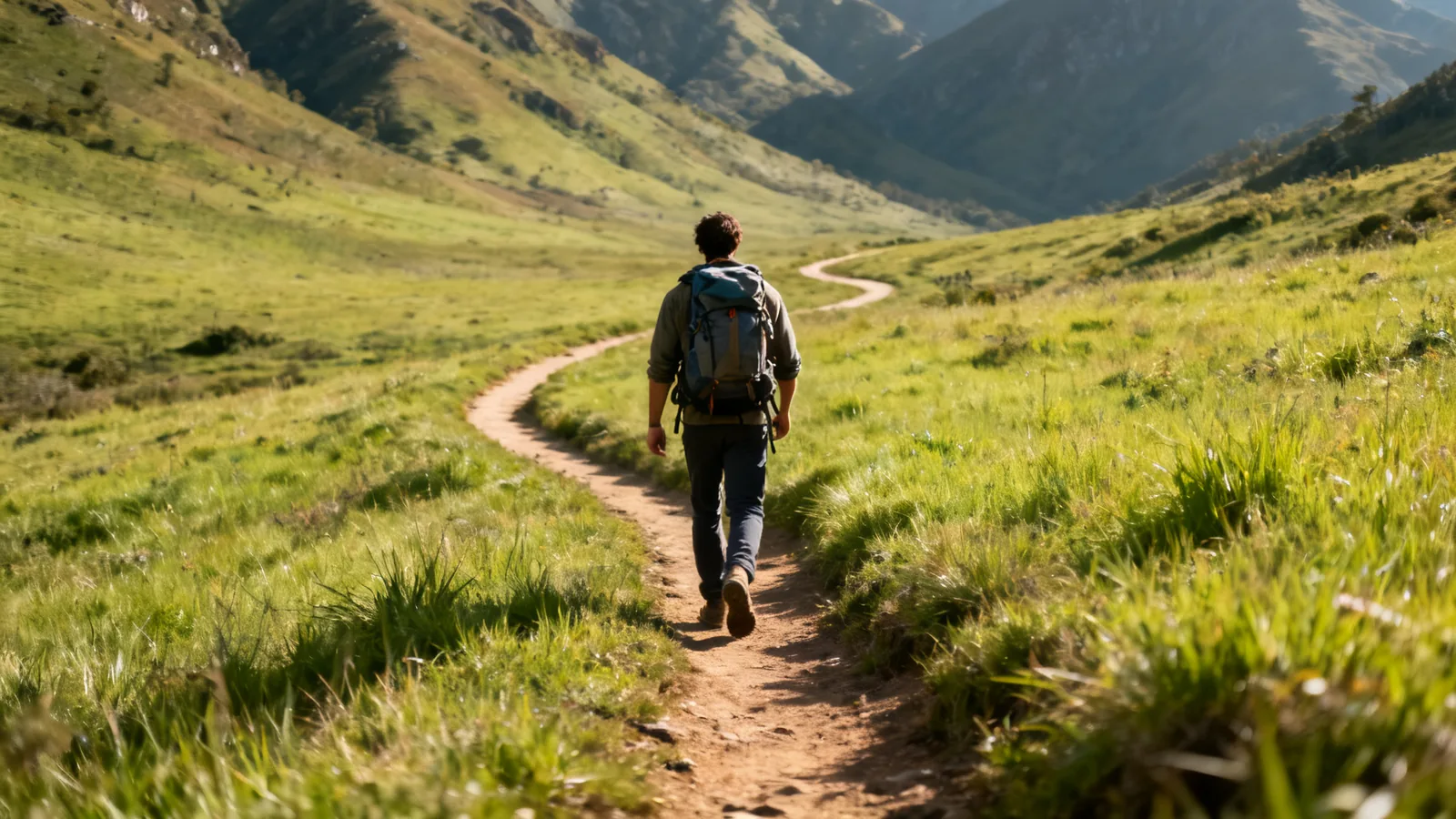
Illustrative scene: a backpacker from behind on a long winding trail through southern mountain grasslands.
Keep the planning layers distinct
O circuit access and each trail night must agree on the permitted one-way sequence.
Complete planning records
Layer: Remote sequence
- What it represents
- Seron towards the pass and Grey
- Decision to verify
- Follow the official one-way rule
Layer: Access decision
- What it represents
- Current circuit notice
- Decision to verify
- A seasonal product cannot override closure
Layer: Booking decision
- What it represents
- Every camp and onward stage
- Decision to verify
- Keep the route confirmed as one chain
Primary route or operator reference · · Original table; cited factual basis. No source artwork copied.
The O Circuit in Patagonia is the full Paine Massif trekking route, adding remote back-side stages to the W's better-known walking goals. It suits a traveller who wants a sustained multi-day route and can manage the complete workload. Choose it from the hardest stage and the linked overnight sequence, rather than from a promise of more sights.
The back-side route has a directional rule and current access limits. Confirm the park decision, all nights and the support level before fixing flights. A map, tent booking or seasonal package is not proof of circuit access. Check the current park decision for the dates.
Circuit summary: secure an allowed route through Seron, Dickson and Los Perros towards the pass and Grey, then complete the planned W-side stages. Compare guided and self-guided service separately, with every sleeping product and exit link confirmed.
O Circuit Patagonia: the route structure
CONAF's official map names the Paine Massif circuit and marks its back-side section as one-way from Seron towards Paso. The W-side links have a different, bidirectional reference. Use these rules to plan the route rather than assuming a clockwise or reverse version is equally allowed.
The O's extra stages change the character of the trip. They add remote camping and the pass stage before the route joins the western W side. This is more than adding several town day hikes to a holiday. Your nights and gear form a continuous walking sequence.
The Torres del Paine area guide helps place the O beside the W and fixed-base visits. A traveller whose main purpose is the towers and selected valley walks may prefer a shorter structure. The O makes sense when the extended circuit itself is the goal.
Current access before seasonal plans
Checked October 2026, the official park ticket listing carries a Paine Massif circuit closure through 31 October, with reopening subject to weather and safety review. Do not treat the following stage example as an invitation to start during that closure.
Providers publish broader season windows, but those remain subject to park decisions. A programme listed for November or later still needs current access booking record. Ask when the seller decides that a route cannot run. Get the available choices and terms for that case.
Keep two status fields on the route sheet: lodging confirmed and access confirmed. They answer different questions. A secured campsite cannot open a trail, while an allowed trail does not reserve a campsite. Both need to be resolved before the circuit is a usable trip.
A sourced eight-day stage example
Vertice's 8D Classic O Circuit gives this published planning reference, checked October 2026. These are the provider's stage distances and estimated times, not measured results from this site or a guarantee of your pace. Its overnight alternatives affect some figures.
| Day | Published stage or goal | Provider distance reference | Provider time reference |
|---|---|---|---|
| 1 | Arrival and walk to Seron | 15 km | 4–5 hours |
| 2 | Seron to Dickson | 19 km | 6–7 hours |
| 3 | Dickson to Los Perros | 12 km | About 5 hours |
| 4 | Los Perros to Grey via John Garner Pass | 18 km | 10–12 hours |
| 5 | Grey to Paine Grande | 11 km | 4–4.5 hours |
| 6 | French Valley day, ending at Frances or Cuernos | 15 or 18 km | 7–8 hours |
| 7 | Frances or Cuernos towards Central | 12.5 or 16 km | 4–6 hours |
| 8 | Base Torres return and park exit | 21 km | 8–10 hours |
Scroll for more →
The source also distinguishes self-guided from guided choices. It lists guide and porter outside the standard self-guided inclusions. Ask for the exact service you are buying. A pre-trip briefing is different from a guide walking beside you.
This table does not prove a universal O distance. Do not add its alternative values into a precise total without choosing the real nights and route endpoints. The daily walking plan, including viewpoint branches and arrival approaches, is more useful for judging effort than a headline circuit number.
Read the first three days as an approach sequence
The early days put the party into the remote back-side section. Confirm the first road arrival and last shuttle before the walk to Seron. A bus arriving at the park gate does not mean the trek starts at that same point or time.
Seron-to-Dickson continues the sequence rather than returning to a town base. You need the next night's record and food ready when leaving the prior stop. If a meal or equipment product differs between camps, it should already be visible in the booking plan.
The Los Perros night prepares the group for the following pass stage. Keep the approach manageable enough to arrive ready to organise the camp. A long optional side trip can reduce the energy and evening time needed for the required route the next morning.
Avoid a fragile first day
Arrive at the gateway in time for any briefing, gear collection and food tasks. An eight-day programme may need a prior town night that is not counted in its trek duration. Ask the provider for the reporting time before buying the incoming flight or border bus.
If travelling independently, arrange the same useful tasks yourself. Save the route and booking records offline, check the current park rule and have a complete first-day transport chain. Buying the first campsite is only one part of being ready to leave town.
Judge the pass day and descent together
The table's longest time reference belongs to the Los Perros-to-Grey pass stage. Use that day to judge fit, together with the approach before it and the next day's walking. One long outing at home is not the same as several trail days. Judge the route with the actual pack and linked effort.
Ask for the provider's current pass rule and changed-day process. You need the allowed endpoint, the person making the access decision and the contact handling later nights. A brochure's description of the view cannot answer those questions.
Include the descent when discussing effort. Reaching a high point is not the end of the stage. The remaining route still needs time and concentration. The night's bed must be reached through the allowed link. Do not use the wish to preserve later tickets as pressure to continue against a current rule.
Do not invent an easy exit
Remote camps are not ordinary road hotels. Ask the provider what support exists if a person cannot continue. Avoid assuming a vehicle can collect them at every overnight stop. The useful answer may differ from one part of the circuit to another.
For a party with very different abilities, one continuous circuit may create a poor shared plan. A fixed base can make shorter routes and rest more workable. Choose a fixed base before booking if the circuit cannot fit everyone. Do not rely on an unsupported remote split.
The W-side days still have large walking
After the pass, the route continues through the western and central walking areas before reaching the Torres side. Do not label these days as a simple cooldown without reading their complete stages. Viewpoint branches add an out-and-back return before the next overnight link.
For the French Valley day, name the planned endpoint and the shorter allowed alternative. The exact goal must fit the next bed and current trail rule. A general valley label does not prove that the highest viewpoint is included or accessible.
The final tower day also needs a complete return and park exit. A route that visits Base Torres on its last day should show the shuttle and road departure after the walk. Ask how the turnaround preserves enough time for that handoff, and what happens if the day's goal is shortened.
The Patagonia W trek tours guide is useful when comparing a shorter supported alternative. It helps separate the continuous W from selected daily outings that do not link every branch.
Distances, altitude and effort are different measures
A route distance describes a length between defined endpoints. A pass altitude describes height above sea level. Neither supplies the total ascent for your day without a route profile. Do not subtract a campsite height from a pass height and call the result cumulative climbing.
The stage table is a provider reference with some alternative overnight values. Its times are estimates for the listed layout. Your pace, stops and conditions can change the day. Ask the guide to explain the likely workload using the real sleeping places and route you have secured.
Compare your experience with the route's demands
Tell the seller about recent walks on rough ground, including descents and back-to-back days. State the pack weight you normally carry and whether camping is familiar. A fitness description such as active gives less useful evidence than a concrete account of the walking you have done.
Try the planned carrying plan before departure. A day pack on a guided outing and a full overnight load are different demands. Supplied equipment can reduce weight, but only when the confirmed product gives the items you would otherwise carry.
Ask about the toughest stage rather than focusing on the average day. A manageable average can hide one day that exceeds a member of the party's ability. The safer planning decision is to choose a structure whose required stages suit everyone who must complete them.
Reserve a complete overnight sequence
Put each date and sleeping sector on one sheet. Then write the day's real start and finish beside it. Check that the approach and onward stages follow the current directional rule. Confirm availability for the full sequence before paying for an isolated night.
The providers Vertice and Las Torres manage different products. A booking from one does not automatically include another's night. A package seller can link the sequence, but should say when each part becomes confirmed.
Do not treat a ranger or historic campsite name on a map as proof of bookable visitor camping. Ask for the current operating property and product. If a needed stop cannot be secured, judge a different allowed sequence or dates. Avoid drawing a new overnight place into the plan.
Sleeping type needs its own record
Record whether each night is a dorm bed, supplied tent or pitch for your own equipment. State the bedding and meal items as separate fields. A word such as refuge or camp is too broad to settle what you need in the pack.
A camping quote should name the tent occupancy and the mats and bags for each person. A dorm quote should state the real bed product and any bedding supplied. Confirm privacy needs before payment, because a trail refuge is not a promise of a private hotel room.
If a night changes, test both adjacent stages before accepting it. A substitute room somewhere else in the park may not be reachable from the preceding camp. The route's continuity matters more than having the same number of nights purchased.
Meals and pack weight across the circuit
Build the food plan day by day. Name breakfast, walking food and dinner, including the first arrival and final exit. A full-board label should be checked against the real issued meals, especially when the first day starts before a normal breakfast period.
Ask what is served or supplied at the remote camping night. Do not assume every stop offers the same meal product. If you prepare food yourself, carry what you need and use only the authorised cooking areas under current park and staff rules.
Shops are a supplement rather than a guarantee of a chosen item. A minimarket listing cannot prove stock for the date, party or dietary need. Buy key food before the remote section unless the provider has confirmed an adequate plan.
Keep dietary answers exact
Tell the real food provider about dietary needs before booking. Ask what it can give at each stop rather than accepting a broad statement from an intermediary. If a right meal cannot be confirmed, discuss the useful alternative before entering the circuit.
Separate preference from a need that affects whether you can complete the route. The supplier's answer should be exact enough for you to decide. Do not assume a restaurant-style menu at a trail camp or carry a food plan that depends on unconfirmed replacements.
Carry only what the booking leaves to you
Use the confirmed gear list to decide pack contents. Avoid carrying a tent that is already supplied unless it serves another part of the route. Equally, do not leave a sleeping item behind merely because the seller described the stay as equipped without naming it.
Keep trail food and weather layers accessible during the walk. Packing the right items beneath the entire overnight load can make each stop slower. The route briefing should explain any site-specific gear and storage plans.
Guided, self-guided and booking-only service
Compare these as different jobs. A walking guide joins the route and supports daily decisions. A self-guided package may arrange nights, meals and travel while you walk independently. A booking service may handle an even narrower part of the trip.
Ask who is on the trail with the party and when their coverage starts and ends. A trip contact's briefing is useful. But it does not put that person beside you at the pass. If guiding is an optional addition, obtain the quote and terms for that addition.
For a guided trip, ask how pace is managed and what happens when the group needs to shorten a day. For a self-guided trip, ask which records and current rules you get before leaving. The choice should reflect your experience and desired support, not only the lower displayed price.
Weather, rules and interrupted stages
Use the park's current rule for each stage. CONAF's visitor advice are the primary planning reference. An allowed route can still be affected by conditions on the day. An older map cannot override a current limit.
Ask the provider for the process when a stage cannot proceed. It should name the contact, the possible route decision and the terms for changed nights or transport. Do not assume that a weather interruption produces either a full refund or a free extra night. The written conditions must settle that.
Keep a reserve before the fixed journey home. A later flight or gateway night can reduce pressure from a changed exit. That reserve is not access to improvise on the trail. But it gives the wider holiday more room to absorb a lawful route change.
Arrival and final transport
The first road stop should link to the walk towards Seron with any required shuttle accounted for. The final stage needs its own park exit and town return. These are separate directions and should appear in the package or transport records.
When you fly to Punta Arenas, add the road leg through Puerto Natales before the trek's reporting time. If you fly to Puerto Natales, confirm the airport pickup and town briefing. When you arrive from Argentina, give the border day enough room before the circuit starts.
After the trek, allow time to collect a stored bag and return hired gear. A bus that reaches town late may not fit a same-evening collection desk. Settle those hours with the real providers, then choose the outer road and flight departures.
Questions before choosing the O
Read an older programme without inheriting its prices
Las Torres' eight-day O page gives a second documentary example of the route. Checked October 2026, its rate notes still say validity ended in March 2026. We therefore do not present its displayed amounts as current prices or use that page to prove present inventory.
The same page separates a self-guided product from private guiding by enquiry. It also qualifies the meal plan at Los Perros and asks travellers to arrange gateway nights around the circuit. These are useful questions to carry into a new quote, rather than current promises to copy without checking.
When a provider page has an old validity line, ask for the current dated proposal. Keep the reply with the route plan and read the exclusions again. A new price alone does not show that the sleeping products, food or transport terms stayed the same. Ask the seller to name any changed services for the new season.
This approach lets you use a real published route as evidence without pretending the entire document is current. The park access decision still needs its own check. A fresh supplier quote can confirm services, but it cannot override a route closure.
Send a circuit brief that can produce comparable quotes
Give each seller the same travel dates, passenger count and route goal. Say whether you want a walking guide or self-guided booking support. Include the party's recent back-to-back hiking experience and the sleeping plan it can accept.
Then state which outer travel is fixed. An incoming flight, border bus or onward departure can constrain the briefing and exit. The seller should know those dates before proposing a route whose first or last stage cannot fit.
For lodging, say whether supplied camping is acceptable where dorm beds are unavailable. Ask for the real tent and bedding inclusions. If a private room is key, do not leave that need implicit within a request for refugios. The provider must explain what is possible in the chosen sequence.
For food, ask for meals marked beside each day, including the remote night. Give dietary needs before the seller finalises the plan. For gear, ask what is supplied at each stop and what you carry between them. This makes the quote comparable across both price and physical workload.
Finally, request the weather-change and cancellation terms alongside the route. You need them before a deposit, not only after a stage is interrupted. The route, inclusions and terms should describe the same current programme.
Choose the shorter structure when it solves the real problem
If the O does not fit, name why before choosing another product. A lack of time, a missing night and an unsuitable pass stage are different problems. Their best alternatives may also differ.
| Reason to reconsider | Alternative to investigate | Point to preserve |
|---|---|---|
| Too few days around flights | A shorter W or selected day walks | Enough full outing time after arrival |
| Remote camping does not suit the party | A fixed room base with guided outings | A workable return and rest option |
| A required night cannot be secured | Another allowed date sequence or walking format | A complete confirmed route |
| One member cannot manage the hardest day | A shared base with different daily goals | Clear supervision and reunion plan |
| Current circuit access remains unresolved | An independently checked open route | Park rules and confirmed service terms |
Scroll for more →
The alternative should be described on its own merits. A lodge visit with selected walks is not the same circuit, but may meet the holiday's main purpose more comfortably. A self-guided W can reduce the total route length while still requiring sustained daily walking. Ask for the hardest day of the replacement too.
A booking gap is not a reason to force an oversized stage. Any alternative needs park approval and a route that suits the party. The simplest calendar solution can create the hardest walking problem. Test the route before accepting the new dates.
Reconsidering early keeps the outer trip easier to change. Once flights and several trail nights are fixed, the available choices can narrow. A clear decision before payment is more useful than preserving the original circuit name at the expense of a coherent holiday.
Is the O just a longer W?
It includes the W-side goals but adds remote back-side stages and the pass sequence. Those extra stages change the nights, gear and continuity demands. Choose it because that full route fits your purpose and ability.
Can I reverse the circuit?
The official map marks the back-side section as one-way from Seron towards Paso. Do not assume a reversed plan is allowed. Confirm the real route with the park and provider.
Is an eight-day programme always guided?
No. Provider packages can offer self-guided and guided choices. Ask which one the quote covers and whether a guide joins the route, rather than only providing a briefing.
What if one night is missing?
The sequence is incomplete. Test alternative allowed dates or products across the whole route before paying for fixed travel. Do not bridge the gap with an unconfirmed campsite or an unrealistic stage.
Verdict on the O Circuit in Patagonia
Before committing, give each traveller the final route and sleeping list. Share the hardest stage and camping plan with the party. Resolve any mismatch while another structure can still be chosen.
Choose the O Circuit in Patagonia for a sustained route whose remote stages and pass day suit your party. Confirm current access first, then secure the full sleeping and travel sequence. Compare the real guide plan, food and carried load for the hardest days.
Reconsider the structure if access or effort does not fit. Do this while the outer travel remains flexible. A well-chosen shorter trek or fixed-base stay can give a better trip than an extended circuit with unresolved nights or unsuitable stages.