
Torres del Paine Hike: Compare Your Options in 2026
This page contains affiliate links to Trip.com: we earn a commission if you buy through one, at no extra cost to you.
Choose a Torres del Paine hike by trailhead, effort and return. Compare a day outing, Base Torres and linked W stages with their transport requirements.
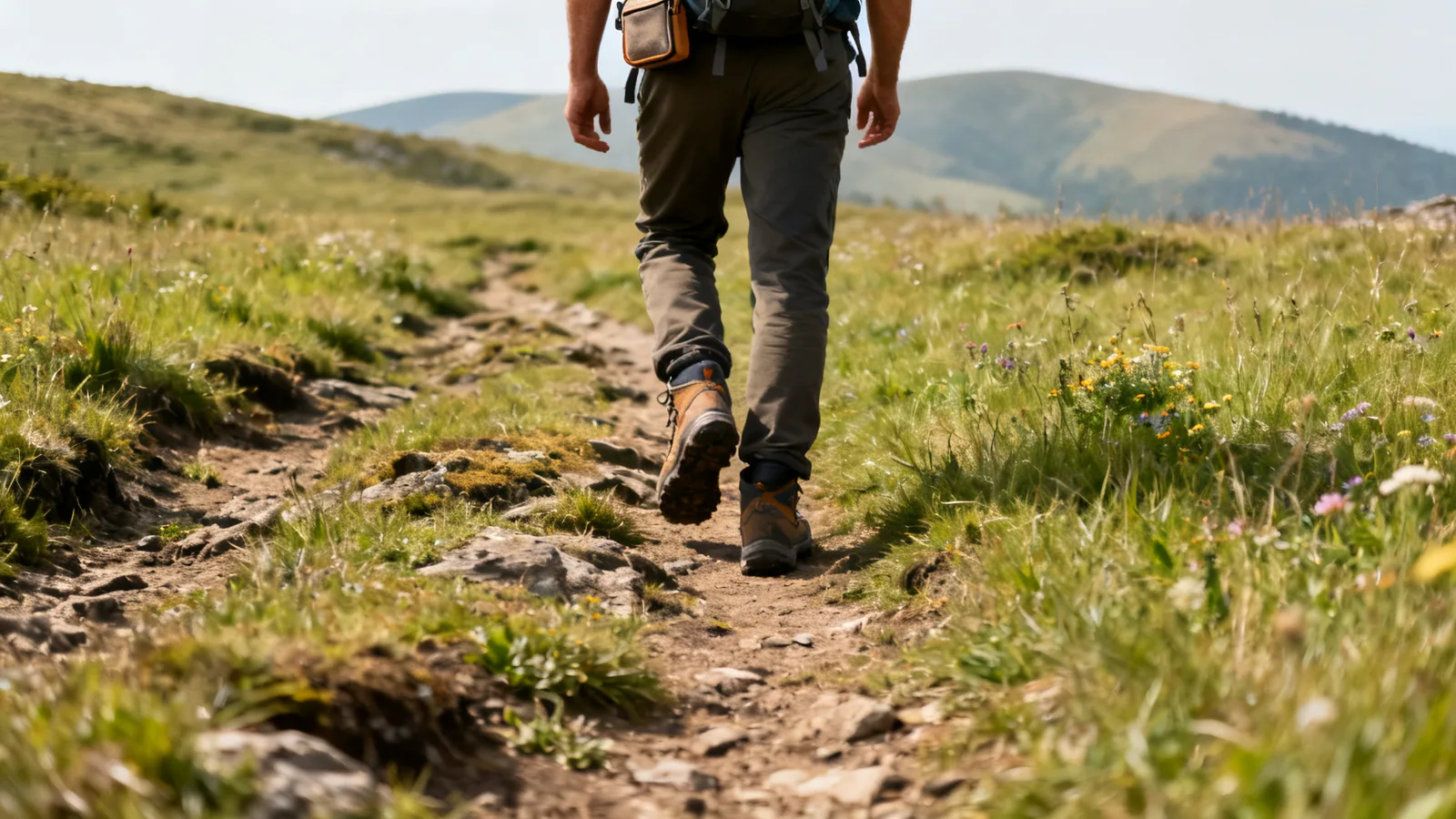
Illustrative scene: a day hiker from behind walking a rough grassland path below distant hills.
Base Torres guided hiking day
- Best for
- Visitors based in Puerto Natales who want a guided walking day to the towers viewpoint.
- Trade-off
- This is a demanding hike, not a scenic driving circuit. Check the full return, age and fitness terms; park entry is separate.
A Torres del Paine hike should be chosen by its starting point, effort and return plan. A roadside outing, the Base Torres day and a stage within the W are different commitments. Choose the walk first, then match transport and the place you will sleep.
Choose a short allowed outing when you have limited time in the park. Choose Base Torres for its exact ascent-and-return day. Choose a W stage when the overnight route is already booked. Check current rules before starting. A long summer day does not override trail rules, and a park transfer does not automatically reach the trailhead you need.
Choose a hike by available time
For one full mountain-walking day, Base Torres is a clear purpose rather than a general park sampler. CONAF's 2026 advice, checked October 2026, lists 8 hours return, medium/high difficulty, 09:00 latest entry and a 15:00 exit time. Ask the ranger which checkpoint each rule refers to. Do not plan from the park's later general closing time.
For a longer W day, compare the overnight endpoints. Vertice's Classic W, checked October 2026, gives a Central-based towers return as 21 km and 8 to 10 hours. That is a full-day estimate. CONAF's advice also prints a 7 km distance without clear endpoints, so it should not be read as the distance for that entire Central-based return.
If the day cannot support a long mountain trail, choose a shorter named outing or a road-based itinerary with agreed stops. CONAF describes six interpretive roadside viewpoints, and its winter regulation separately names Salto Grande, Mirador Cuernos and Playa Grey. Confirm the current access and effort of the chosen walk. Road access does not make every route short or suitable for every visitor.
Route comparison
| Walking plan | Main task | Limitation |
|---|---|---|
| Short day outing | Return to the real road pickup | Not every road tour includes the desired walk |
| Base Torres | Plan ascent and descent as one day | Conditions and trail cutoffs govern the start |
| W stage | Link the start with a confirmed bed | Branches add time before the next stop |
| O stage | Follow the wider allowed circuit | Seasonal back-side access needs its own check |
Scroll for more →
Trailheads and transport
Use the park guide and official map to name the starting point. Give that name to the transport provider. “Torres del Paine” is too broad for a useful drop-off rule.
If your plan needs a boat, keep its direction and check-in beside the road ticket. A transfer into the park and a ferry across a lake are separate services. Leave room between them rather than assuming a protected link.
Laguna Amarga serves the eastern approach, followed by the link to the Welcome Center and Central sector. Pudeto serves the Pehoe catamaran to Paine Grande. The road end at Hotel Lago Grey serves another boat and walking area. These names should appear in your transport plan, because a park-wide pickup label cannot settle the walking start.
If a walk begins after a boat, check the sailing before committing to the trail. If it ends before a boat, work backwards from check-in and allow for the party's slower pace. A self-guided package can arrange all these tickets while leaving the walking decisions to you. Ask for a guide if trail leadership is the support you need.
Effort and weather exposure
Judge the full walk, including its return or onward stage. A viewpoint reached halfway through the day is not the end of the task. Keep your turnaround tied to the park's rule and the time needed to finish at your pace.
Do not treat clear skies at departure as a promise for the whole route. Follow current park advice and choose an allowed alternative if needed. A guide's role should be clear in the package you bought.
CONAF warns that Patagonian weather changes rapidly and asks visitors to carry layers for rain, wind and snow. It also says the interior trails have no telephone or internet signal. Download the route and share the agreed finish before leaving. Moving a pickup by message may not be possible from the trail.
When choosing between walks, assess the least confident person's return as carefully as the ascent. A long descent over rocks after the main view can be the hardest part. Keep essential medication and weather layers with the person who needs them. Do not make safe completion depend on every walker staying at the fastest person's pace.
Access and reservation checks
Check the current route notice. The ticket portal's October 2026 details says the Paine Massif circuit remains closed until the end of October, with reopening subject to review. Admission elsewhere does not make that circuit available.
Use the lodging comparison when the walk needs an overnight stop. A hotel room and a trail bed can serve different routes and access plans.
Choose the trail plan
Compare the W Trek packages by real walking guidance and overnight sequence.
Checked October 2026, Pases Parques publishes general opening hours of 07:00 to 21:00 in October to April and 08:00 to 18:30 in May to September. Earlier trail limits still apply. Its notice keeps the O closed through 31 October 2026, with an assessment before reopening. A room advertised on the northern circuit does not settle that access question.
For winter planning, the June 2026 regulation closed the W during June and July 2026 and set special conditions for other walks. The ticket page gives a guide requirement for Base Torres and the W from 27 April to 15 September 2026, extending where conditions require it. Recheck the rule for your own date; do not apply a past season's exception as permanent permission.
Factors to consider
Choose Base Torres when the viewpoint hike itself is the reason for the day and the full return fits. Choose a W stage when you want linked trail nights and have the next bed secured. Choose a shorter allowed outing when transport leaves too little time for a mountain route. Those decisions are more useful than selecting the longest walk on a menu.
For a guided product, ask for the normal route and its shorter fallback. Find out whether the guide stays with a slower walker and how the group returns if a trail closes. A clear answer should name an actual plan, rather than promise that the company will somehow fit everything in.
Options checked against operator and park pages
Base Torres for the tower-viewpoint purpose
Best for: visitors who want that chosen walking day. Evidence: CONAF publishes Base Torres visitor rules. Trade-off: the descent and return transport must fit too.
A W stage for a linked overnight trek
Best for: walkers with the next bed confirmed. Evidence: CONAF's map names the linked trail stops. Trade-off: a side trip uses time before the onward stage.
These choices are based on park material checked October 2026. They are not a ranking of hikes we have personally tested.
Route comparison with published distances
The estimates below describe Vertice's named itinerary stages. They were checked October 2026 against the operator's W and O programme. A different start or turnaround changes the figure. Use them to judge scale rather than to prescribe a pace.
| Route in the supplier plan | Distance | Time | Decision it supports |
|---|---|---|---|
| Central to the towers and back | 21 km | 8 to 10 hours | Choose only with a full hiking day and settled return |
| Central to Cuernos or Frances | 12.5 or 16 km | 4 to 5 hours | Match the estimate to the actual booked overnight |
| French Valley day to Paine Grande | 21 km | 7 to 8 hours | Include approach, branch and onward walking together |
| Paine Grande to Grey | 11 km | 4 to 4.5 hours | Treat as one way unless your plan adds the return |
| Dickson to Los Perros | 12 km | About 5 hours | A northern O stage before the pass day |
| Los Perros to Grey over the pass | 18 km | 10 to 12 hours | A demanding O commitment rather than a casual extra walk |
Scroll for more →
A kilometre on a rough ascent is not equivalent to a kilometre on a level path. Vertice calls the towers day demanding and the French Valley day high difficulty. It labels Paine Grande to Grey medium. Compare surface and the full sequence as well as distance, particularly when several long days follow one another.
The Grey suspension bridges need additional time beyond the standard Paine Grande-to-Grey stage. Vertice suggests 3 to 4 extra hours return beyond the refuge for that direction. A package listing Grey does not necessarily include the bridges. Ask which turnaround appears in the actual day's plan.
Questions and next planning step
Does a day tour include a proper hike?
Read its real daily plan. A tour can focus on road viewpoints or include a named walk. Ask which trail is used, where it starts and whether a guide joins it. Compare the walking task with your purpose. Avoid assuming a park tour has the same content as a trekking day.
Can I add a viewpoint to any W stage?
Only when the allowed route and whole day make it workable. Add the approach, branch return and onward overnight stage. Check the current cutoff and your pace. A bed booking record does not guarantee time for every side trip shown on the map or listed in a brochure.
Does the park ticket reserve a trail bed?
No overnight booking is established by entry alone. Check the named lodging and the full walking sequence separately. A package may include both, but it must say so. Keep the pass and bed booking record together, and recheck access for the linking stage before relying on the route.
Should I choose the longest walk available?
Choose the walk that matches your purpose and the full day's effort. A longer route can use time you need for the return or another booked stage. A shorter allowed outing can be the better choice for a limited visit. Clear views and trail conditions are not guaranteed by distance.
Sources and facts last checked
Checked October 2026: CONAF visitor advice, the park map and official ticket details. Stage estimates are tied to their published start and finish.
Verdict on choosing a Torres del Paine hike
Choose a Torres del Paine hike from the trailhead and complete return or overnight stage. Settle current access before transport. Buy guide coverage where it matches the real walking task.