
Los Perros Torres del Paine: Camping Before the Pass
Plan Los Perros in Torres del Paine as a linked O circuit night. Check the approach, pass stage, sleeping kit, food and disputed facility details.
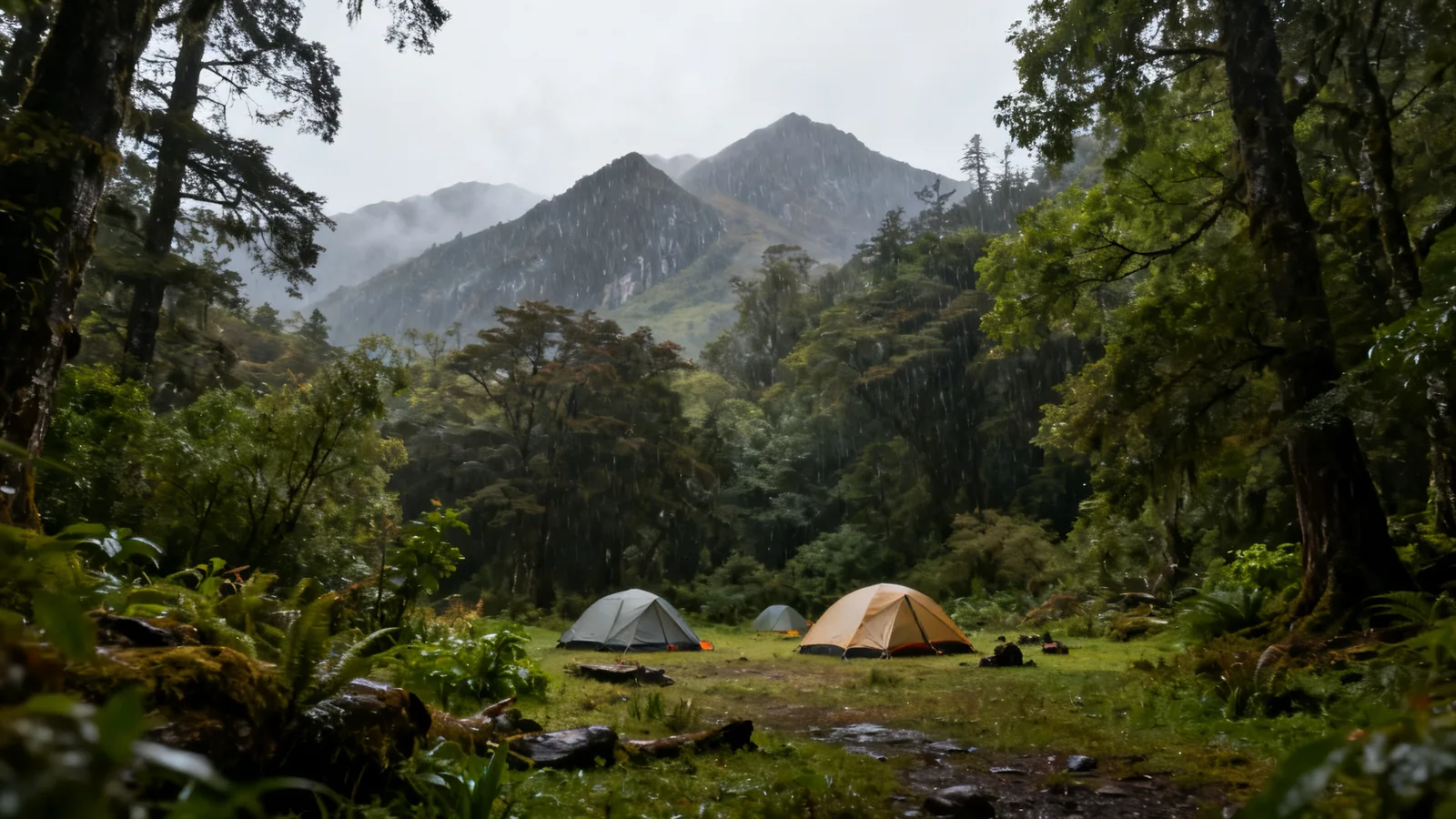
Illustrative scene: a sheltered forest campsite with small tents and distant wet mountains.
Keep the planning layers distinct
The Los Perros night links the preceding approach with a separately checked pass day.
Complete planning records
Layer: Approach
- What it represents
- The booked previous camp
- Decision to verify
- Keep the permitted stage clear
Layer: Camp night
- What it represents
- Reserved space and sleeping equipment
- Decision to verify
- Confirm the whole sleeping kit
Layer: Onward day
- What it represents
- Current pass instruction and next bed
- Decision to verify
- Ask who handles an interrupted stage
Primary route or operator reference · · Original table; cited factual basis. No source artwork copied.
Los Perros in Torres del Paine is a remote O circuit camp. It precedes the John Garner Pass stage. Plan it as one night in a complete walking sequence, not as a stand-alone hotel visit. You need the preceding approach, the onward stage and the current circuit access decision to fit together.
Vertice manages the campsite and publishes its facilities and booking products. The park governs route access. These sources have different roles. A provider's season window does not prove current circuit opening. A park ticket does not reserve your camping equipment.
Los Perros decision: confirm the allowed O route and all linked nights before paying for this camp. Check the exact tent and sleeping kit, food plan and current pass rule; there is no standard road transfer to the campsite.
Where Los Perros fits in the O
The broad back-side sequence approaches from Dickson, reaches Los Perros and continues over the pass towards the Grey side. CONAF's official route map marks the circuit's back-side direction from Seron towards Paso. It should not be reversed by drawing a shortcut from Grey.
This makes Los Perros different from a room near a park road. You reach it through the walking route, with the right preceding night and booking records. Your food and gear have to support the whole stage, not only the time spent at camp.
Use the O Circuit planning guide to place this night in the wider sequence. The camp can be a required part of that route. But its availability alone does not prove the other nights or present access to the pass.
Think in three linked days
Review the day before Los Perros, the camp night and the day after as one block. The approach sets when you can reach the site. The night sets whether you can eat, organise gear and rest. The onward stage sets what must be ready before departure.
The approach can affect your energy for the pass day. Read those linked stages together, despite separate booking rows. Judge the combined workload and recent walking experience. If the planned sequence is too hard, consider a different allowed route. Avoid assuming the campsite will give a rest day you have not booked.
A rest or extra night also needs provider booking record and a workable onward plan. It is not enough to leave an empty date on the route sheet. Check what that change does to the next bed and the circuit's operating rules.
Approach from Dickson
Vertice's Los Perros product page, checked October 2026, lists the Dickson-to-Los Perros approach as 12 kilometres with a rough five-hour reference. Treat this as the provider's stage description, not your guaranteed pace or a complete figure for optional detours.
Ask the guide or provider how the day's real start and finish relate to that reference. A time beside a trail name does not include every stop you may make. Loading a pack, checking out and taking a meal can also affect the time available before the next camp.
Keep the route on the marked trail and follow the current local rule. A named glacier or viewpoint near the approach is not access to add an unmarked side trip. Reach the confirmed camp with energy in reserve. Leave time to prepare for the next stage.
A useful approach-day checklist
- Confirm that today's endpoint is Los Perros on the correct date.
- Keep the booking and park records accessible before leaving the prior camp.
- Carry the food needed during the approach, not only ingredients for dinner.
- Check the current weather and trail rule before setting out.
- Know which kit is waiting at Los Perros and which items remain in your pack.
This list is a planning aid rather than a substitute for a guide's route briefing. The official trail and local access decisions remain the authority. If the day's rule changes, update the overnight and onward plan through the responsible provider.
The onward pass stage needs a fresh decision
The pass day is the reason to prepare carefully at Los Perros. Do not assume the next stage is open because you reached camp. Check the current rule from the park and the staff or guide in charge of your departure.
The provider describes Los Perros as the stop before the John Garner Pass. The English product page spells the name John Gardner, while the park map uses John Garner. Treat those as references to the same route context. Use the official map's naming when discussing the allowed stage.
Ask for the day's allowed endpoint and the plan if the stage cannot proceed. You need to know who contacts the next lodging provider, where the group waits and how the wider route changes. A generic statement that the trek depends on weather does not answer those operational questions.
Do not place a fixed flight or international departure immediately after a fragile sequence. The pass stage and park exit can affect later travel. A gateway buffer is most useful when it sits before the next service you cannot easily change.
Current opening versus the listed season
Checked October 2026, the official Pases Parques listing carries a Paine Massif circuit closure through 31 October, subject to safety review before reopening. That current notice governs an O proposal.
Vertice's site gives a general October-to-April weather-dependent season for Los Perros. The two statements answer different questions. One describes the provider's broad seasonal window; the other states a present circuit limit. Do not convert the seasonal window into a claim that you can walk to camp in October.
For a later trip, repeat the access check before payment and again before departure. A planned reopening date remains conditional until the current decision is published or confirmed. Get a written answer for the exact walking route. A general assurance about park visitors is not enough.
If the circuit is unavailable, consider another walking structure with its own confirmed access. The W trek tours comparison helps judge supported W or selected day-walk options. Those are alternatives to the O experience, not equivalent substitutes for its back-side stages.
Confirm the camping product
Choose between carrying your own kit and reserving equipment that the provider supplies. The Los Perros page offers camping space and separately reservable tent, mat and sleeping bag items. Your booking record must say which of those you have bought.
The lowest campsite price should not be assumed to include the full sleeping setup. A tent item also needs a clear occupancy limit. Check each person's sleeping bag and mat, especially when the party shares one tent. A booking for a pitch is different from a ready-to-use sleeping product.
| Product field | Record on the booking | What to avoid assuming |
|---|---|---|
| Camping place | Passenger count and date | A space supplies a tent |
| Tent | Occupancy and included setup | One tent line covers every person |
| Mat | Quantity and type supplied | A bag includes a sleeping surface |
| Sleeping bag | Quantity and product details | Everyone's bedding is bundled |
| Extra items | Only the items purchased | Towels or pillows come by default |
Scroll for more →
If travelling through several managed camps, repeat this check for each night. One site's full-equipment product does not prove another site's inclusions. The route plan should distinguish gear carried between camps from gear reserved only at one stop.
Carrying your own equipment
Choose kit for the conditions expected on the booked route and obtain the provider's current packing advice. Test that your pack can carry the complete sleeping and food load comfortably. A long day with a small bag is one test. Walking with an overnight load is another.
Check your tent and sleeping system before travel rather than discovering a missing item at the remote camp. If the package supplies some gear, ask what remains your task. Keep the answer exact enough that there is no duplicated weight or missing piece between the two lists.
Using reserved equipment
Ask how the reserved items are issued and whether the tent is already set up. Confirm the place and process for reporting a problem. A product description can outline the standard plan. But the real booked kit and party count need to appear on your record.
If a supplied item is unavailable or unsuitable, contact staff before it affects the night. The route may give little room to replace gear elsewhere. Know which seller handles the issue if your booking came through a package rather than directly from Vertice.
Facilities: confirmed categories and unresolved details
The Los Perros product page describes shared bathrooms, cold-water showers and a sheltered cooking area. It lists a minimarket and limited charging provision. These are the provider's published categories, not a self-guided inspection or promise of stock when you arrive.
Its internet and service hours conflict with Vertice's general FAQ. The camp page says no guest internet, while the FAQ describes some included connectivity at managed sites. Checkout and service hours also differ between the two pages. Ask for the Los Perros-specific current answer; do not rely on either version without booking record.
| Facility | Useful question for the provider |
|---|---|
| Bathrooms | What facilities run for the booked date |
| Shower | Is the published cold-water plan current |
| Cooking shelter | What equipment must you bring and when may you use it |
| Minimarket | Which essentials should be bought before entering the circuit |
| Charging | What points and hours are currently available |
| Internet | Is any guest link given at Los Perros |
| Checkout | Which Los Perros-specific departure rule applies |
Scroll for more →
The uncertainty is useful to resolve before travel because it changes packing and communication plans. If internet is key for a remote work or family commitment, a conditional camp link is a poor foundation. Arrange the update schedule before entering the trail sequence.
Build a food plan that survives limited stock
Carry the food needed for the planned remote stages. A minimarket can be useful. But a published shop does not guarantee a chosen item or sufficient stock for your whole party. Do not make the next day's lunch depend on finding your preferred food at camp.
Separate the approach lunch, camp dinner and onward day's food. A full-board booking elsewhere does not automatically cover Los Perros. Ask the seller to mark the meal plan night by night, including when a packed lunch is issued.
If you prepare your own food, use only the authorised cooking plans and follow staff rules. The provider's page states that cooking is confined to the designated shelter. Do not cook in a tent or assume any sheltered-looking spot is an approved alternative.
For dietary needs, obtain a direct answer from the real food provider. A seller's general promise to accommodate a preference may not prove what is available at a remote stop. Plan the needed food before entering the circuit if a right meal cannot be confirmed.
Think beyond the dinner
An adequate evening meal is only one part of the next day's readiness. You also need breakfast that fits the allowed departure and food that is accessible while walking. Ask about service timing if the onward stage starts before the usual meal period.
Prepare the next day's food before packing for sleep where useful. Keep it distinguishable from the remaining supplies for later nights. This reduces the chance of carrying the right quantity of food but using it on the wrong day.
Ask staff about the approved water plan and any current treatment advice. Do not infer a safe source from its appearance or proximity on a map. Route-specific details should come from the provider or park rule you get for the trip.
Organise the evening around the next stage
On reaching camp, verify the assigned place and the kit on your booking before settling in. Locate the facilities you will use and ask for the next morning's current rule. Resolve any missing equipment while staff can still help, rather than after the sleeping routine begins.
Then separate overnight needs from the pack for the pass day. Keep a warm layer and weather protection easy to reach. Keep trail food and documents within reach. You should not need to empty the pack at the first stop.
Check the next overnight record and the contact for that property. If a change is already likely, ask the responsible provider how it is handled. Clarify the next link at camp. Check that later suppliers have the updated plan.
Rest matters when the next day is a demanding stage. Use the available evening for useful tasks and a realistic sleep plan. An early tent setup does not make an extra walk necessary. Preserve energy for the required route next morning.
Booking Los Perros as part of the full sequence
Check the whole O sequence before paying for an isolated camp night. Begin with an allowed route and a proposed date for each stop. Confirm that the nights match the directional rule and the allowed stages, then choose each sleeping product.
If booking directly across several managers, you are in charge of making their calendars agree. A selected item or enquiry is not the same as a paid booking record. Keep a status field for each night so a pending service is visible before you commit to flights.
If buying a package, ask whether all lodging is confirmed at the time you pay. Some sellers may begin requests under their own terms after taking a deposit. Get the deadline and the options if a required night cannot be obtained. Do not treat a broad route name as proof that the sleeping sequence has been secured.
| Sequence check | What should be clear |
|---|---|
| Before Los Perros | Confirmed prior bed and allowed approach |
| Camp night | Correct date, visitors and sleeping equipment |
| After Los Perros | Current pass rule and confirmed onward bed |
| Meals | Food available for all three linked days |
| Entry | Park ticket and route access decision |
| Changes | Contact responsible for an interrupted sequence |
Scroll for more →
Review change and cancellation terms while the plan is still flexible. Moving Los Perros by one date may force changes before and after it. Check the full chain before accepting a revised night, even when the alternative looks close on the calendar.
Guided support and self-guided task
A guide can support route decisions, pace and the response to a changed pass day. Ask whether the guide joins the full circuit or only selected stages. Booking assistance alone does not give someone walking beside the group.
A self-guided circuit needs you to manage the confirmed route, food and current rules. Do not choose independence solely because the paths appear clear on a map. Compare the real workload of carrying gear and making decisions within the allowed route.
If one person is struggling on the approach, discuss it early with the guide or staff. A remote overnight sequence gives fewer simple exit choices than a town-based day walk. Ask the provider before booking what support exists when someone cannot continue. Avoid assuming a vehicle can reach the camp.
For mixed ability, the full circuit may be the wrong shared format. A fixed-base stay can offer more room for shorter walks and rest. Choose the fixed-base format deliberately when it fits. Avoid an O plan that requires everyone to match the fastest pace.
Communications and offline records
Plan as though an internet link may not be available. The contradictory provider pages make this especially key at Los Perros. Save the park and lodging documents, route reference and useful contacts before entering the remote stages.
Tell the person expecting updates when you may be out of contact and when the next planned message will come. A missed routine message should not arise merely because the route plan promised connectivity it could not confirm. Use the provider's guidance for any emergency communication plan.
Keep key records readable without opening a web account. A plain-text list of nights and passenger names can supplement the official booking files. It does not replace those files. But it makes the route easier to explain if a screen or link fails.
Questions about Los Perros
Three booking problems to solve before travel
The night is available, but equipment is not confirmed. This is not a complete supplied-camping booking. Ask whether the missing item can be reserved for the same date and party. If it cannot, judge whether carrying your own kit is a workable choice for the whole circuit. Do not accept a tent-night record as proof of sleeping bags or mats. Change the route or booking only after checking what the replacement product supplies.
Los Perros has to move by one date. Start by checking the prior Dickson night and the onward Grey-side night. The change may need moving the entire remote section, then the remaining circuit stops and exit transport. Update the route sheet before buying the new night. A blank place in one calendar is useful only when the neighbouring dates and allowed stages still link. Ask the package seller to reissue the complete route record if it manages the change.
The park decision is still pending. Keep that uncertainty separate from the lodging status. A confirmed tent is a service booking, while the circuit opening is an access decision. Ask the seller which cancellation or date-change terms apply if the route cannot run. Consider how long you can leave the outer flight and hotel choices flexible. Avoid paying for several non-refundable services on the assumption that a conditional opening will become definite.
These examples are not claims about a provider's inventory or refund policy. They show the questions needed to turn a partial booking into a coherent trip. The provider's written answer and terms must settle the real case.
Keep the final exit visible from the start
Los Perros sits far enough into the circuit that a change there can affect more than the next night. Before paying, trace the plan beyond the pass stage. Link the last bed, park exit and gateway town. Put the service dates beside those endpoints.
If the last planned boat or bus is fixed, ask how the seller handles an interrupted remote stage. The answer may involve a changed route, another night or a different exit, subject to current rules and availability. Do not presume any one of those choices is offered. Request the provider's real process and the contact who links it.
The outer travel should allow for the uncertainty you accept within the trek. A flight the morning after a late park exit gives fewer choices than a gateway night before flying. If the wider holiday has a border move, allow for that separate step as well. The purpose of the reserve is to protect the journey home without putting pressure on a trail decision.
Read supplier evidence with the right scope
A site's facility description, a general FAQ and your booking record serve different roles. The facility page outlines the standard camp. The FAQ gives broad guidance across several properties. The booking record should state what you purchased for the exact date and people.
When those sources disagree, send the provider the two statements and ask for the Los Perros answer that applies now. Keep the response with the booking. Do not silently apply a general refuge meal or checkout rule to this campsite. Get a precise answer about the tent and services. A broad facility list may describe another stop.
If the provider cannot confirm a detail key to your trip, plan around its absence or choose another travel structure. This is especially right to internet-dependent commitments and specialist food needs. This camp is a remote trail night. Resolve key needs before entry rather than relying on an uncertain on-site option.
Can I reach Los Perros by car?
It is a remote trail camping stop, approached through the walking circuit. Do not plan a normal road transfer to the tent. Ask the provider for the approved approach and current access before booking.
Is a tent included with the campsite?
Not automatically. The provider lists camping space and equipment products separately. The booking record should list the tent, mats and bags for the party. Carry any kit not supplied.
Can I rely on Wi-Fi at camp?
The provider's current camp page and general FAQ disagree. Obtain an exact answer for your date and plan offline records regardless. Do not use a possible link as the only way to manage the next booking.
Does the October season mean the circuit is open now?
No. The general seasonal window is conditional. The official October 2026 notice carries a circuit closure through the end of the month pending review. Check the current park decision for the planned dates.
Verdict on Los Perros in Torres del Paine
Treat Los Perros in Torres del Paine as the useful preparation night before an allowed pass stage. Secure the route and full sleeping kit. Carry food that does not depend on uncertain shop stock. Resolve the conflicting facility details directly with Vertice.
Use the Torres del Paine park guide to judge whether the O structure fits the wider trip. A remote camp night makes sense when the approach, onward stage and current access all support the experience you want.